
_
Polished Concrete
Polished Concrete Flooring: Durable, Stylish, and Timeless
Polished concrete flooring is a concrete surface that is ground and polished to create a smooth, clean, and attractive finish. Special diamond tools are used to refine the surface and bring out the natural look of the concrete.
The final floor can have a soft matte look or a smooth polished shine. The amount of grinding can also reveal fine or larger aggregates in the concrete, allowing the finish to match the design of the space.
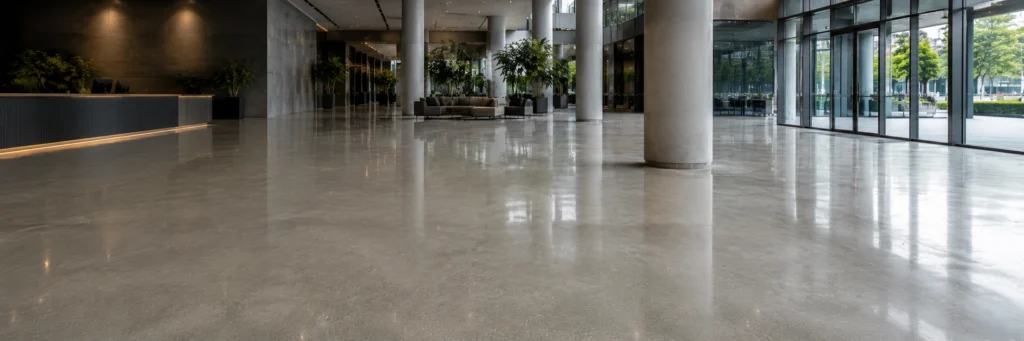
Where can polished concrete applied?
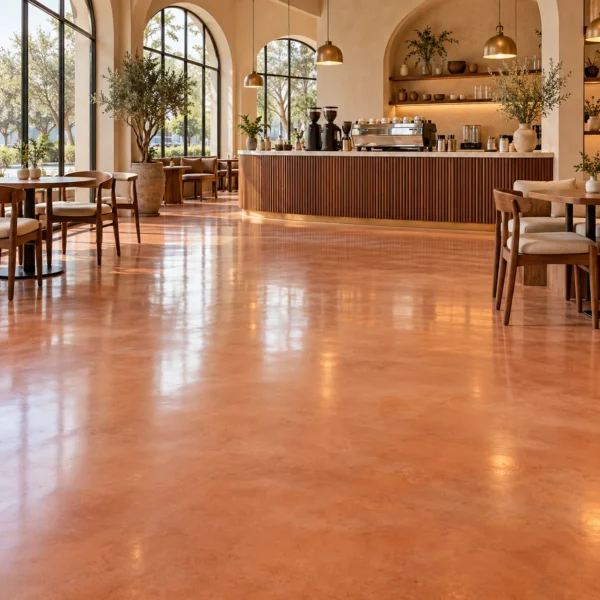
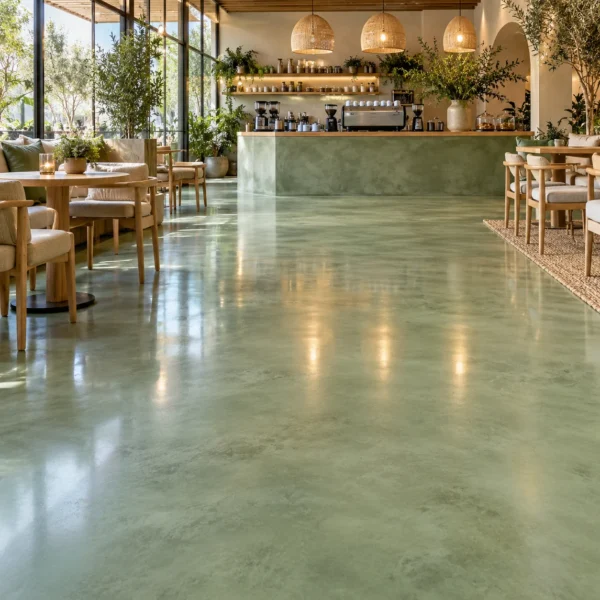
Although grey is the colour most often associated with polished concrete, you can also choose black, red, green and other shades. The final colour depends on the concrete and the colouring method. Polished concrete flooring appears in airports, shopping centres, factories, garages and car parks, where durability and easy cleaning matter.
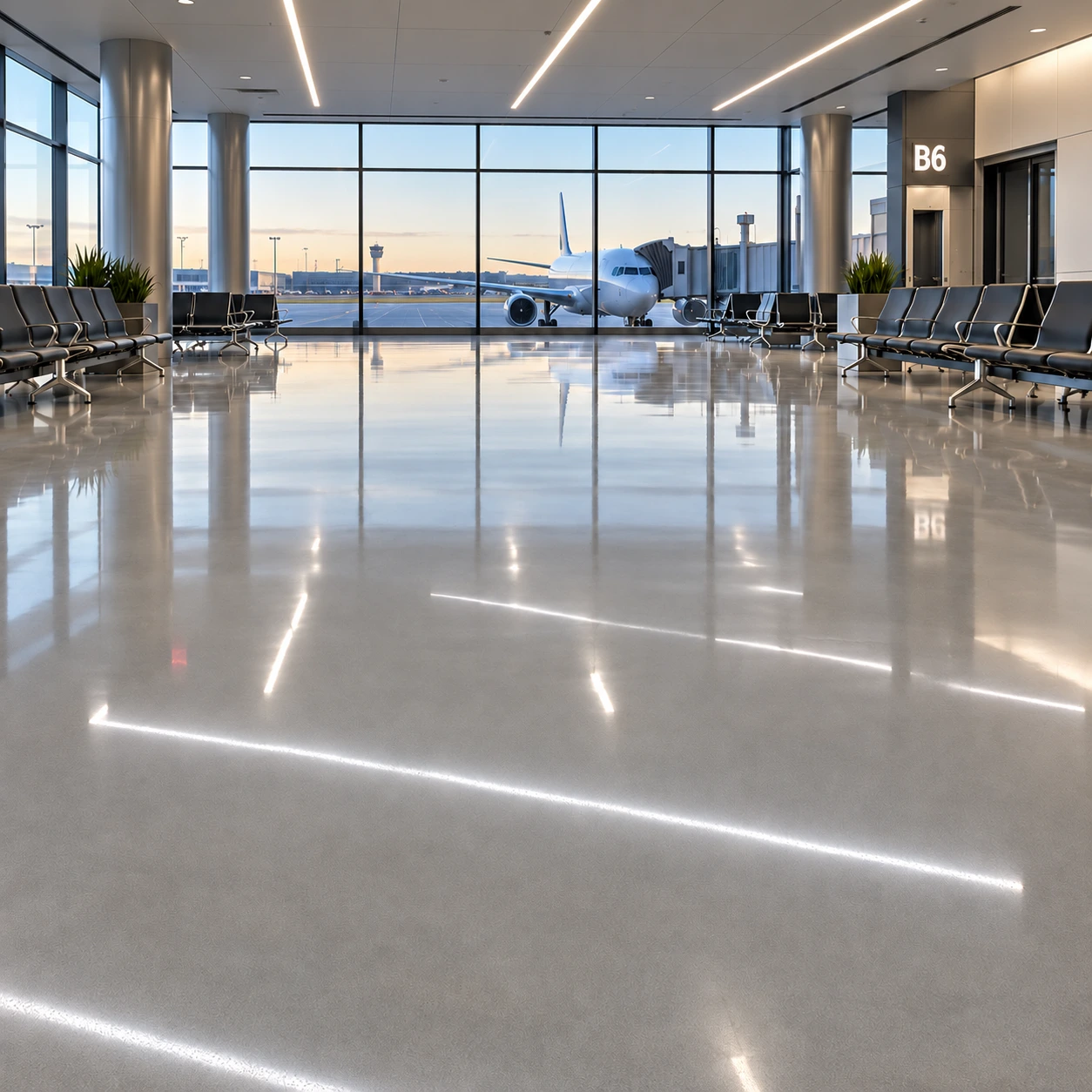
Polished concrete in airports
Polished concrete flooring is appropriate for terminal lobbies, corridors, and lounges. It accommodates high footfall and wheeled baggage while facilitating easy maintenance.
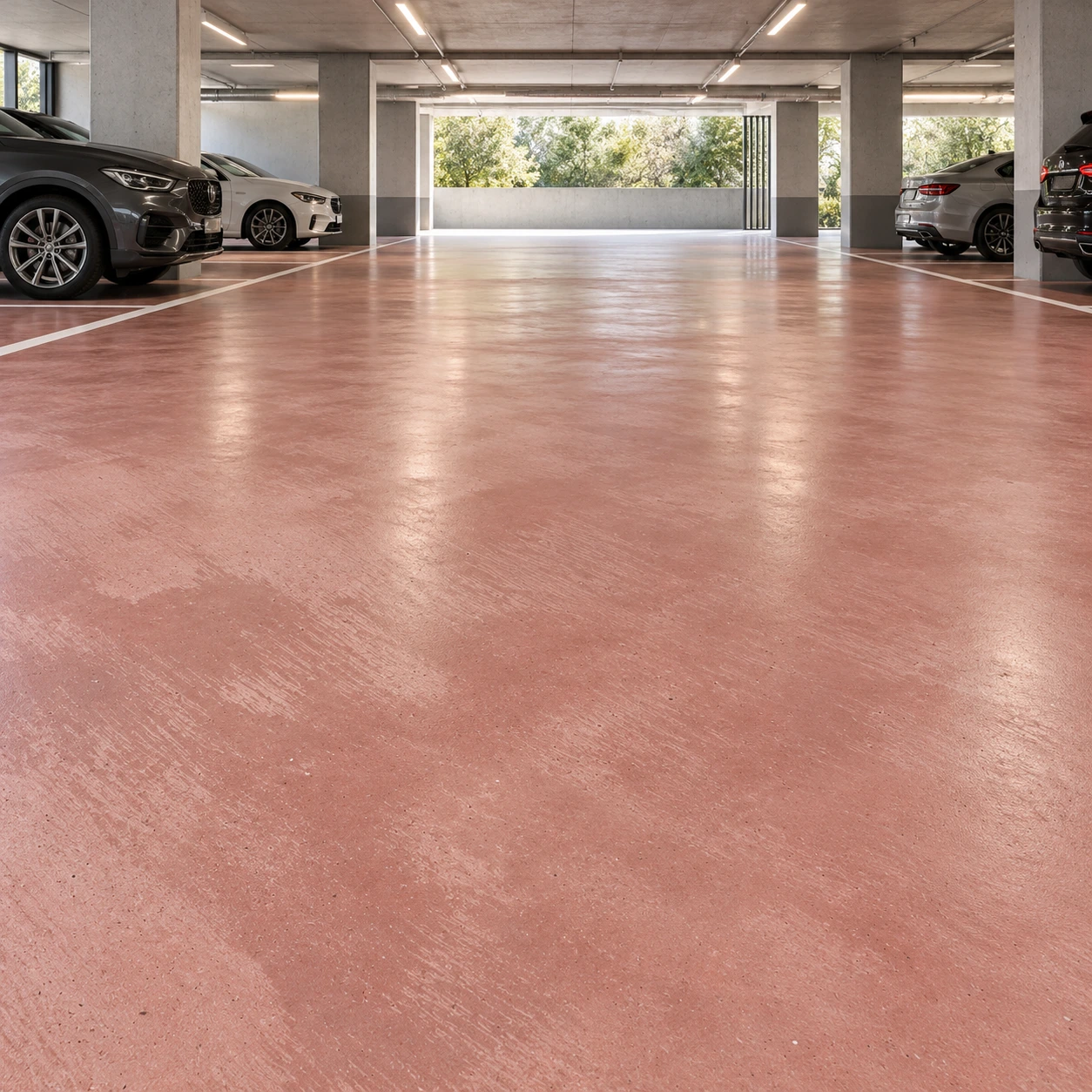
Car parks and garages
It is well-suited to resisting any wear on the surface. You need to have a concrete floor that can withstand vehicle weight as well as sufficient resistance to stains and slipperiness.
Shopping centres
Polished concrete provides a practical floor for shops and busy walkways. Different colours and finishes help you match the interior.
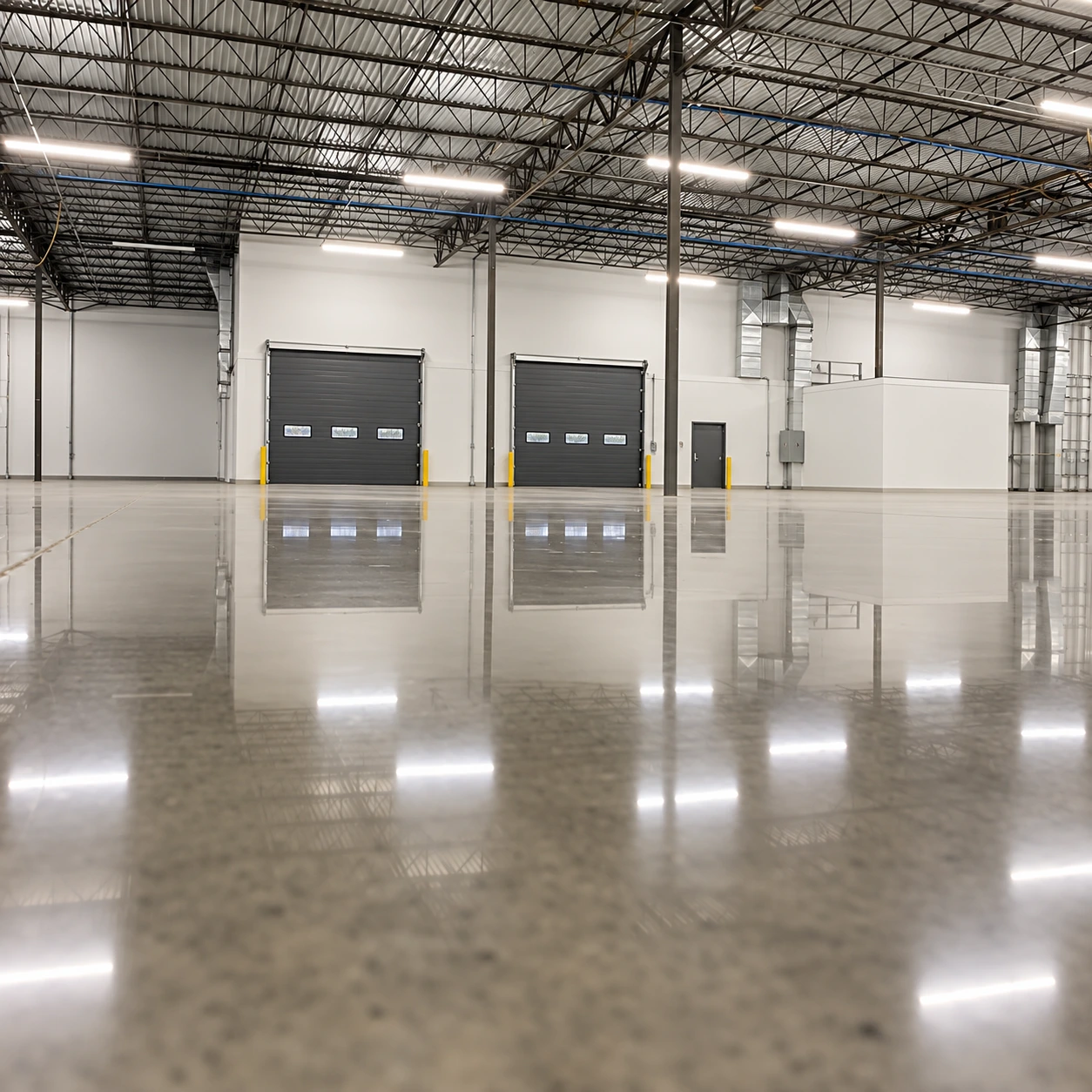
Factories and warehouses
A properly specified floor withstands regular traffic and reduces surface dusting. Assess machinery loads and chemical exposure before choosing the system.
Home flooring
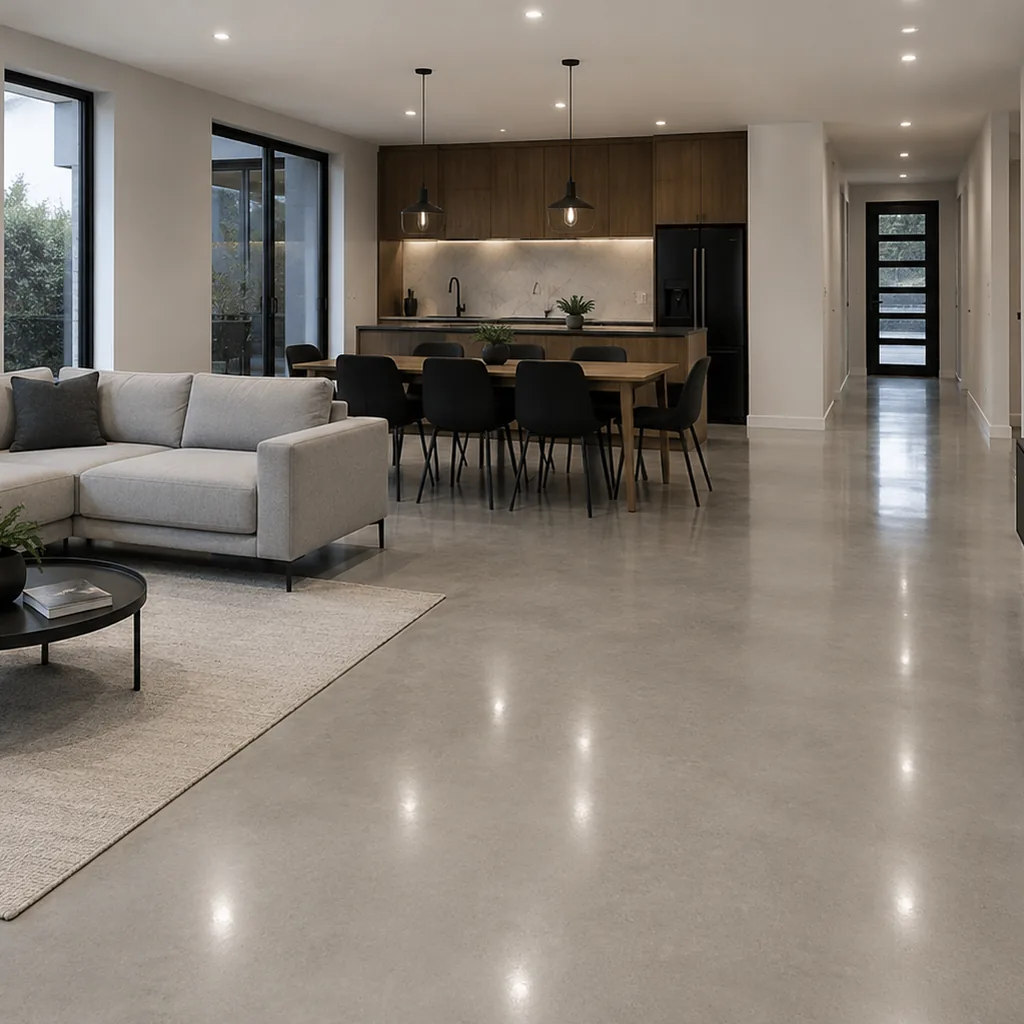
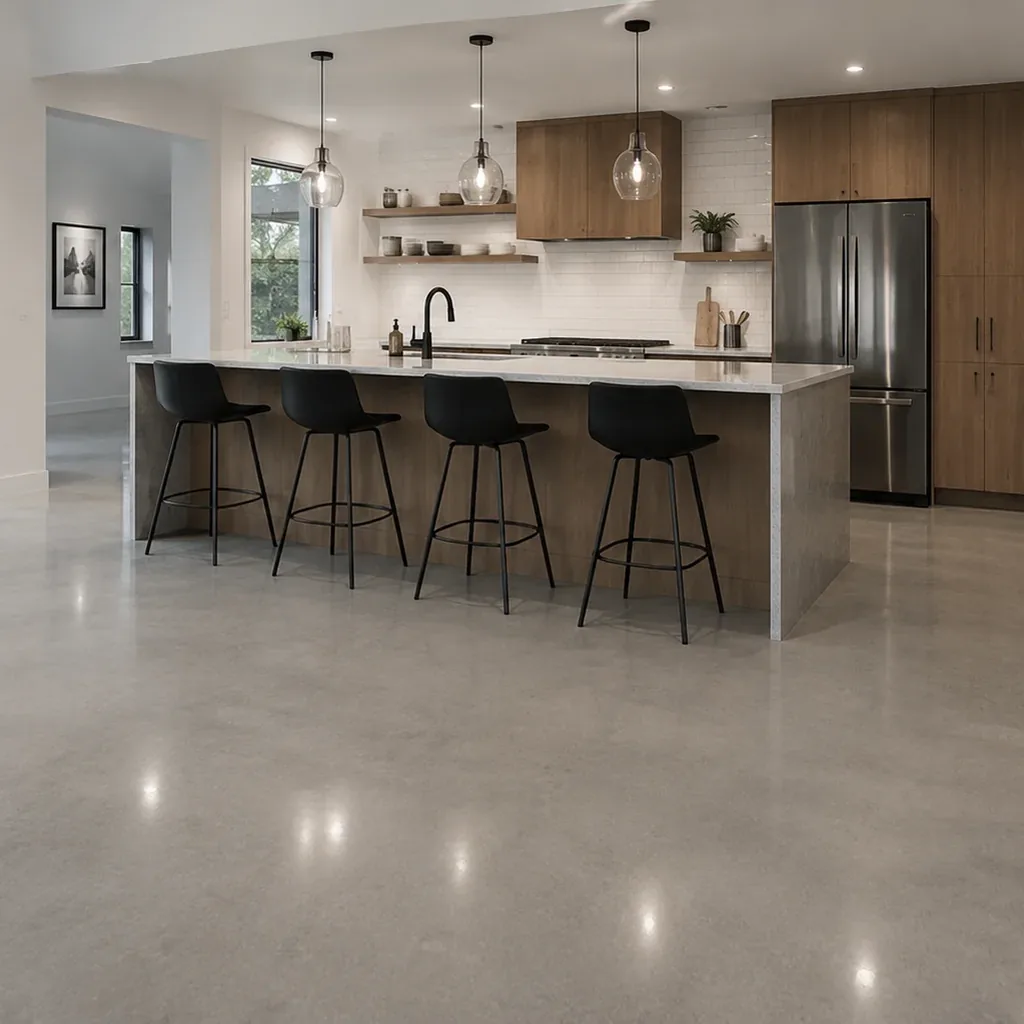
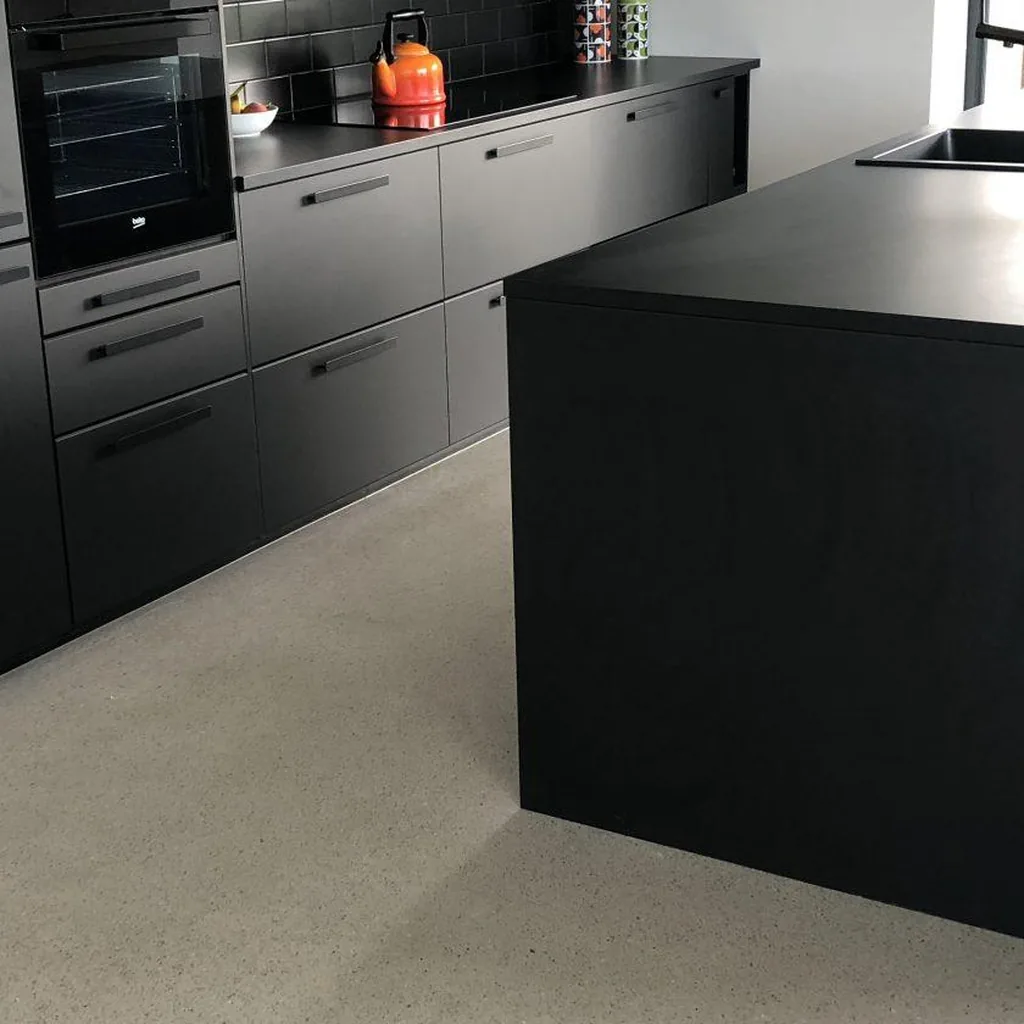
You can use polished concrete in living rooms, kitchens and hallways. Its continuous appearance suits open spaces, with satin or glossy finishes available.
Hotels and restaurants
Polished concrete works in hotel lobbies, corridors and dining areas. Suitable protection and prompt cleaning help limit stains from food and drink.
Polished concrete for Cafés and coffee shops
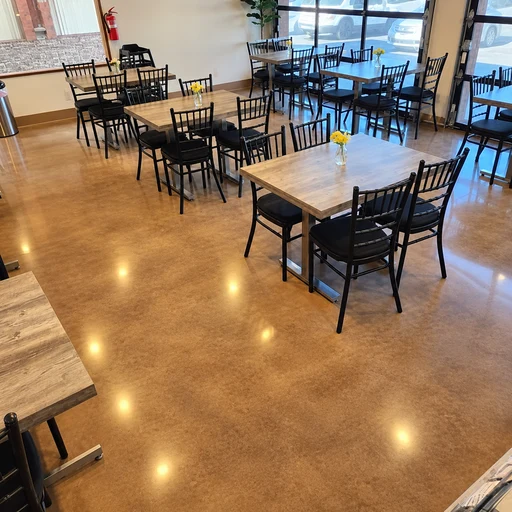
Polished concrete gives your café or coffee shop a clean, simple look. It handles daily foot traffic and is easy to clean. You can choose a colour that matches your tables and walls. Suitable surface protection helps reduce stains, while cleaning coffee and milk spills quickly keeps your floor looking good.
Polished concrete floor types
1. Honed Concrete
Honed concrete has a smooth surface with a soft, satin appearance. It reflects less light than highly polished concrete, making it an option for designs that call for a quieter finish. Technically, honing is a stage of surface refinement before higher levels of polishing.
2. Glossy Polished Concrete
Glossy polished concrete is refined further to produce clearer reflections. A highly polished finish creates a bright surface where reflected objects appear sharp and recognisable. The final appearance should be specified by the required sheen and checked on a sample area.
3. Stained Polished Concrete
Stained polished concrete uses a compatible stain to add decorative colour to the surface. Acid stains react with the concrete to develop colour, while other colouring products work differently. The selected treatment and the condition of the concrete influence the finished appearance.
4. Aggregate-Exposed Polished Concrete
Grinding reveals the sand and stones within the concrete. Light exposure creates a fine, salt-and-pepper pattern, while deeper grinding reveals larger stones for a stronger decorative effect.
The current Concrete Polishing Council chart identifies three exposure classes: cream finish, fine aggregate and full aggregate. The concrete mix and original slab placement influence the pattern, so exposed stones may not be evenly distributed throughout the floor.
5. Densified Polished Concrete
A concrete densifier treats and hardens the surface as part of a flooring system. Suitable products improve surface abrasion resistance and help reduce dusting.
Densification is a treatment rather than a separate visual style. A densified floor can also have a cream finish, exposed aggregate or added colour. The chosen product determines its application requirements and performance.
6. Coloured Polished Concrete
Coloured polished concrete gives designers options beyond natural grey. Depending on the flooring system, colour can be introduced using penetrating dyes, colour hardeners or integral pigments mixed into a polishable topping.
These methods produce different effects. A surface-applied dye should not be described as providing colour throughout the full depth of the concrete. Choose a colouring product suitable for the intended location and flooring system.
7. Polished Concrete Overlays
A polished concrete overlay is a specially formulated cement-based topping installed over a prepared, suitable substrate and then polished. It provides a new finishing surface for resurfacing projects.
The topping must be designed to accept polishing. Installation thickness, substrate preparation and polishing time depend on the selected product; ordinary screeds and decorative coatings should not be assumed to perform the same way.
Polished concrete advantages
IFTIKA polished concrete flooring is a practical choice for spaces that need a strong, durable floor. It handles everyday wear from foot traffic and moving vehicles, making it suitable for factories, warehouses, loading areas and car parks. Its smooth surface is easy to clean and helps reduce dust buildup. The polished finish also reflects light, giving the space a brighter, more open feel. With proper installation and care, it provides a lasting finish, although cracks and chips can still occur.
Polished Concrete colours





Frequently asked questions
What is polished concrete flooring?
Polished concrete flooring is made by grinding and polishing a concrete surface. This process creates a smooth floor with a finish that ranges from a soft sheen to a high shine.
Where can polished concrete be used?
Polished concrete is used in homes, offices, shops, cafés, hotels and airports. It is also a practical flooring option for warehouses, factories and car parks.
What are the main types of polished concrete?
The main types are cream finish, salt-and-pepper finish and full-aggregate finish. They differ in how much sand and stone is visible on the surface.
Can polished concrete floors have different colours?
Yes, polished concrete can have colours such as grey, red, green and brown. Suitable pigments, dyes or stains add colour, depending on the concrete and the chosen flooring system.